Coronavirus | Employment Law & HR Implications for Employers

When business continuity is put at risk by a crisis and/or people related threats like the seemingly rapid spread of the coronavirus (COVID-19), the HR issues this creates for Employers can significantly compound matters.

The first priority for Employers is to consider the health and safety of employees.  

During a pandemic or crisis, a business must keep itself and employees informed about related health risks. 

Health and Safety Actions could include:

  • Having a system or means to keep abreast of government advice on any current issue, as it develops. This can be an internal system or one that has been established via a third party such as a law firm or risk management business.
  • Keeping everyone updated on actions being taken to reduce risks of exposure in the workplace.  Employers must ensure that:
  • contact data (email, work telephone, personal telephone and address) held within any such system is reviewed and updated on at least an annual basis to account for the common regular change in personnel and personal data; and
  • there is an emergency communication system in place in the event that normal means of communication cannot be accessed or utilised. An example of this is where email functionality is not available, and a business needs to turn to personal telephone contact details.

Fundamentally, in the event of a pandemic, the Employer must also take steps to ensure that there is good hygiene in the workplace (based on the facts and science of the pandemic itself) and that working practices do not pose undue risks to employees. Actions could include:

  • Reviewing systems of hygiene to ensure that they provide appropriate protection. In the case of influenza pandemic for instance, staff need to be encouraged to regularly wash their hands with soap, to carry and use tissues and sanitising hand gel. Practically, training or communications to all staff about why these practices are required often boosts compliance beyond a simple mandate about doing so.
  • Increasing the cleaning of hard surfaces in the workplace, particularly phones and door handles. 
  • Carrying out a cost/benefit analysis for offering flu injections (or any similar preventative measure depending on the pandemic) to the workforce. Communicating the potential benefits of the preventative measure for the employees, their families but also those who may be unable to have this (for example, those who cannot have it due to allergies) may help to increase the uptake.
  • Carrying out a risk assessment to identify any higher risk groups, such as those who have a high level of contact with each other.

HR Issues for Employers

At the same time the health and safety issues are being addressed, employers also need to be prepared for the possible HR implications that may arise as a result of the spread of coronavirus (COVID-19). 

Employee Absence and Sick Pay

The key thing to note is that the employer’s normal sick leave and pay entitlements still apply even if someone has coronavirus.  As always, an Employer’s obligations in respect sick pay depends on why the employee is absent. 

Employee with Coronavirus

If employees are unwell with coronavirus, then your normal sick pay policies and procedures should apply.  Employees who believe they have coronavirus may be instructed by their GP to self-isolate for 14 days and so may not be able to produce a Fit Note in the usual way.  Employers should take this into consideration and consider relaxing their normal sickness policies in these circumstances.

Self-Isolation or Quarantine

The advice from Government at the time of writing this article is that people who have visited the identified “high risk areas” must stay at home and self-quarantine for 14 days.  

There is no legal (statutory) obligation to pay employees who are not sick but cannot work because they have been told by a medical expert to self-isolate, have had to go into quarantine or are abroad in an affected area and are not allowed to travel back to the UK but Acas recommends that it is good practice for employers to treat these scenarios as sick leave and follow their normal sick pay policy, or agree for the time to be taken as holiday.  

Employers who choose not to do this could exacerbate the problem because there’s a risk an employee in this situation could come to work because they need to get paid and this could then spread the virus, if they have it, creating even more problems for Employers. 

Time Off for Dependants

Under current UK Employment Law, employees are already entitled to unpaid time off to look after someone who depends on them in an unexpected event or emergency and this would apply to coronavirus situations where an employee’s dependant is sick or needs to go into isolation or hospital, or if schools are closed and they need to look after their children.

Normally, the amount of time off an employer would consider reasonable in unexpected events or emergencies would be two or three days but the time allowed must be reasonable for the situation which, in the case of coronavirus and self-isolation, may need to be much longer.  If employees need to stay off to look after dependants or ask to stay away from work because they are generally concerned about coronavirus, then they could be offered:

  • home working
  • holiday;
  • unpaid leave; or
  • Flexible working

Employer Imposed Absence

Where an employee is suspended by their employer on health and safety grounds, because of a possible risk of infection, it is likely that they have the right to continue to receive full pay (in the absence of a contractual provision to the contrary). Where an employee is willing and able to perform work in accordance with the contract, there is an implied term that the employer has an obligation to pay wages, unless there is a contractual right not to do so.

If you inform employees that they must stay away from work as a general ‘precaution’ then it is recommended that those employees should be paid their normal salary, but the Government is currently encouraging businesses and schools to remain open and operational so suspension of employees for medical reasons may not be an issue for Employers.

Common-sense and Flexibly

Each case should be assessed on the facts and employers should avoid knee-jerk reactions.  The issues created by an outbreak of coronavirus are not normal and therefore the normal approach to absence don’t apply for coronavirus related absences.  Employers should also exercise caution and think carefully before using coronavirus related absence to trigger warnings under absence management policies.

Advice and Support

If you are an employer who requires assistance with any of the issues raised in this blog call us now on 0800 612 4772 or Contact us via our website.   
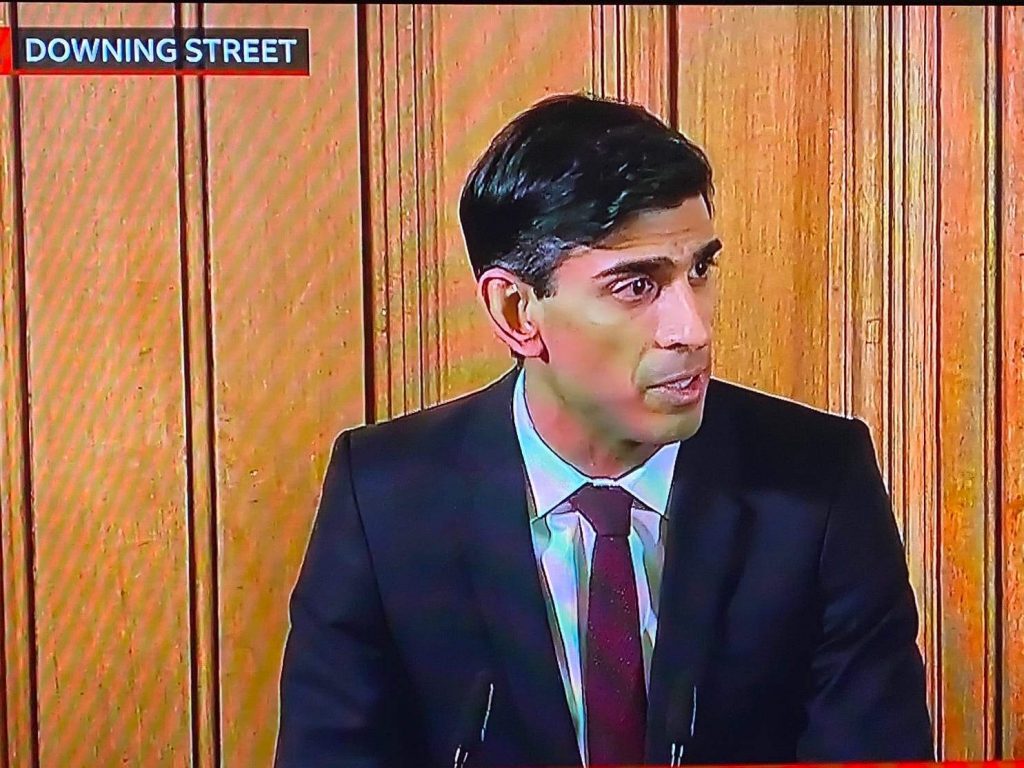
Latest update: https://employmentlawservices.com/emergency-legislation-on-statutory-sick-pay-announced-by-prime-minister/

Useful Resources:

https://www.nhs.uk/conditions/coronavirus-covid-19/

https://www.gov.uk/guidance/wuhan-novel-coronavirus-information-for-the-public

https://www.gov.uk/guidance/contacts-phe-health-protection-teams

https://www.hps.scot.nhs.uk/a-to-z-of-topics/covid-19/

Adverse Weather & Employment Law – Guidance For Employers

The impact poor weather may have on Employers will be determined by the decisions they make, many of which may be based on issues completely out of their control, but those decisions and the way the issues they create are handled will ultimately determine the full legal / HR implications.

Key questions for Employers:

  1. What if an Employer decides to close the business temporarily due to poor weather conditions? Do staff still need to be paid?
  2. What if an Employer does open for business but staff can’t make it in because of the weather? Is this unauthorised absence? Should absent staff be paid?
  3. What if some staff make it in but other staff from the same area don’t, should they face disciplinary action?

Employer Initiated Closures

If an Employer decides to temporarily close their business due to extreme weather conditions they are effectively laying-off their staff, albeit temporarily. However, unless there is a contractual right to lay employees off without pay, or employees expressly consent to being laid off without pay, Employers are obliged to pay staff their normal pay for the duration of the lay-off.

Employee Initiated Absence

Employees are protected by a number of statutory rights, some of which may apply in instances of extreme weather where schools or childcare facilities are themselves suspended due to poor weather.

Employers should start with a full review of existing HR policies. Do you have an absence policy? Does it include an ‘adverse weather policy’?  Having such a policy can help provide clarity when unpredictable weather causes challenges and can confirm what the company’s expectations are in terms of absence, what options are available to staff (eg. parental leave) and what the company’s pay arrangements in will be in these circumstances.

Employees have a right to time off for dependants and could invoke this right if schools or childcare provisions are cancelled due to adverse weather. Equally, qualifying parents have the right to take unpaid time off work to look after their children or make arrangements for their welfare.  Effective staff absence and absence management polices as part of a thorough employee handbook containing critical HR policies is essential in acting as a point of reference when issues arise and can help make life less difficult and costly for Employers.

At Employment Law Services (ELS) we specialise is protecting businesses and helping them prevent problems by providing them with legally compliant contracts of employment and comprehensive Employee Handbooks tailored to meet their specific requirements.

How Can You Avoid Getting Caught Out?

  1. Contact Us – we will undertake full review of your current arrangements and provide you with our findings and recommendations.
  2. Ensure you have appropriate contracts should be drafted and issued to ensure the nature of the working relationship is clearly determined.
  3. Give us a call on 0800 612 4772 and we’ll help you to prevent problems and protect your business.

Valentines Day: 5 potential problems with workplace romances

When a romance has been formed in the workplace, it can be difficult for the employer to put an end to it. The Human Rights Act 1998 states that everyone has the right to respect for their private and family life subject to a few limited exceptions.

We have looked at 5 potential problems that could arise from workplace romances and how to prevent these problems from occurring in the first place.

Policies on workplace romances

Employers should take a proactive approach towards office romances by having a policy that sets out guidelines for workplace dating – before problems occur. These policies should be clearly communicated to all members of staff.

Most employers will be ok with two colleagues having a relationship as long as this does not affect their work responsibilities. However, it is important to note that relationships between two parties where one has managerial authority over the other is likely to be frowned upon.

Conduct in the workplace

This policy should be used to define what conduct will be viewed as appropriate/inappropriate and what will result in disciplinary action.

A ban could be included within this policy on “intimate behaviour” during working hours. For example, kissing, holding hands etc.

One rule for all

As with all workplace policies, the rules should be applied consistently throughout the workforce, including senior members of staff. Rules set out in the policy should be applied to whatever the couples protected characteristics may be under the Equality Act 2010. For example, rules should not be more enforced to a same sex couple than they are to a heterosexual couple. This would be a clear case of sexual orientation discrimination.

When the relationship turns sour

In the event that two colleagues break up, employers may feel it would be appropriate to have a rule within its policy that requires employees in a personal relationship to inform their line manager if the relationship status changes. For example, if the two parties break up.

This would provide employers and managers with a good opportunity to address potential problems early on and remind employees of the behaviour that will be expected of them.

Workplace dating: romantic gesture or sexual harassment?

Employees with romantic feelings towards a colleague may wonder if asking them out would be viewed as sexual harassment?

As with many employment law questions, the answer is “it depends.”

The Employment Tribunal when deciding a sexual harassment complaint will always look at the context of the case.

For example, an employee asks out a colleague – the colleague declines – the employee accepts this rejection and does not push any further. A sexual harassment allegation in this case would probably not stick.

However, an employee could have a valid claim for sexual harassment if the colleague persisted after the employee made their feelings clear.

How can EmployEasily Legal Services help?

If you are an employer who requires assistance with any of the issues raised in this blog contact us today for your free consultation 0370 218 5662.

Performance management guidance for employers

Performance management is the process that employers use to maintain and improve the performance of their workforce so that organisational objectives are met.

Most performance management procedures will involve:

  • Employees being set performance targets
  • Performance meetings between managers and employees to discuss performance
  • Evaluating employees against their performance measures
  • Records of performance being taken

Why is performance management important?

Managing employee performance is critical to an organisation’s success. If the performance is not monitored then there are no standards, if there are no standards, employees will feel less inclined to perform to the best of their ability.

Further, it is an essential element of employment when getting things done. It gives employees and management structure that will help an organisation:

  • Motivate employees
  • Monitor employees and ensure that they are making valuable contributions towards the companies’ goals
  • Recognise and acknowledge the good work of employees
  • Detect and improve poor performance

How to get performance management right

  • Identify clear objectives
  • Think about what suits your organisation best
  • Be transparent about the full process
  • Consistently engage and consult with employees
  • Get senior managers on board

How can EmployEasily Legal Services help?

At Employment Law Services (ELS) we can offer training courses and e-learning on performance management for you and your team. We can also support through any individual issues that you may encounter.

If you are an employer who requires assistance with any of the issues raised in this blog contact us today for your free consultation 0370 218 5662.

Redundancy & Protective Awards

Ex-Thomas Cook workers could be in line for thousands of pounds of extra pay.

When a business goes into administration or liquidation employees have a right to claim monies owed to them by the company but how this is claimed depends largely on their status as creditors. 

Claims can be made on the National Insurance Fund via the Redundancy Payments Service (RPS), usually in the following circumstances:

1) By employees made redundant within the first 14 days of administration;

2) By those who have lost their jobs on company liquidation;

3) By preferential creditors (members of staff) who were retained during the initial administration period, but who have been unable to claim all monies owed to them from the sale of business assets.

However, where there has been complete failure by the employer to consult with employees regarding their dismissal, you can still make a claim for an additional “Protective Award” even if your employer becomes insolvent, and the tribunal is likely to award a payment of 90 days’ pay to each employee. 

What is a Protective Award?

A Protective Award is an award of compensation of up to 90 days’ gross pay, that can be awarded by an Employment Tribunal, for failure by your employer to collectively inform and consult you where you have been dismissed on the grounds of redundancy and the government’s National Insurance Fund would cover your award.

How to Make a Claim

If you are interested in making a Protective Award claim against your former employer, contact Employment Law Services (ELS) for free initial legal advice. There are very strict time limits for bringing these claims and they must be brought within three months less one day of the date of your dismissal so please contact us as soon as possible.

New Vento Bands For Injury to Feelings Awards

There are new ‘Vento’ guidelines for injury to feelings awards in discrimination claims presented after 6 April 2019.

The new bands are:

  • lower band (less serious cases): £900 to £8,800
  • middle band: £8,800 to £26,300
  • upper band (the most serious cases): £26,300 to £44,000

This annual update to the Vento guidelines, setting out the bands of awards for injury to feelings, adjusted for inflation, is taken into account by Tribunals when considering what to award for damages in discrimination cases as a remedy for the hurt, humiliation and degradation suffered by the employee and is considered separately from any claim for financial loss such as loss of earnings.

The EqA 2010, most of which took effect on 1 October 2010, brought together and strengthened the previous discrimination legislation. It is concerned with discrimination in respect of the “protected characteristics” of age, disability, gender reassignment, marriage and civil partnership, pregnancy and maternity, race, religion or belief, sex, and sexual orientation.

An employer can be “vicariously liable” for discrimination or harassment committed by an employee in the course of employment. However, there is a defence available to an employer if it can show that it took all reasonable steps to prevent the employee from doing the discriminatory act or from doing anything of that description, commonly known as a “statutory defence”.

How can Employment Law Services (ELS) help? 

At Employment Law Services (ELS) we can offer advice and support to Employers to help them to ensure they have taken all reasonable steps to prevent discrimination including, drafting appropriate HR policies and procedures, offering training courses and e-learning on equality and diversity and bullying and harassment and support with any individual issues that you may encounter.

If you are an employer who requires assistance with any of the issues raised in this blog contact us today for your free consultation 0800 612 4772.


The new bands are:


New National Minimum Wage Rates – 1 April 2019

New National Minimum Wage (NMW) and National Living Wage (NLW) Rates take effect from 1 April.

          Old Rate         New Rate         Increase (%)
                               
                               
25 years +         £7.83         £8.21         4.9%
21-24 years         £7.38         £7.70         4.3%
18-20 years         £5.90         £6.15         4.2%
16-17 years         £4.20         £4.35         3.6%
Apprentice rate         £3.70         £3.90         5.4%


The national minimum wage (NMW) is a prescribed minimum hourly rate of pay which employers must legally pay to most of their workers. The legislation which underpins the NMW is highly technical in nature and many employers have unintentionally fallen foul of the rules and have, in addition to being hit with sizeable financial penalties, have been named and shamed for underpaying their workers.

Employers must keep sufficient records to establish that workers have received the NMW and it will be presumed that the worker has not received the NMW unless the employer can prove to the contrary.

The NMW is enforced by HMRC. The enforcement measures available to HMRC include service of notices of underpayment, civil penalties, “naming and shaming”, recovery of underpayments through tribunals or civil courts, and criminal prosecution. HMRC’s policy on using these measures is set out in BEIS: National Minimum Wage Law: Enforcement.

If you are unsure about what records you need to keep and/or how long you need to keep them don’t hesitate to contact us.

How Employment Law Services (ELS) Help SMEs to Prevent Problems & Protect Their Business

https://youtu.be/2laGL4dOsLw

A short video about the services Employment Law Services (ELS) LTD provide to SMEs throughout the UK. Thanks for sparing 2 mins to watch it!

If you’d like more information about how we can help you and your business, Contact Us via our website and one of our team will be in touch or alternatively you can call us on 0800 612 4772.

Employment Law Services Achieves a Major Milestone

Back on 16 December 2008 Employment Law Services (ELS) was formally incorporated as a limited company and on 1 January 2009 we officially commenced our first year of trading and as the bells struck midnight on New Year’s Eve not only were we celebrating the dawn of a new year, we were also celebrating achieving a significant milestone in the history of Employment Law Services (ELS), 10 fantastic years of trading!

Employment Law Services (ELS) Achieves a Major Milestone

Over the past decade we have seen our team grow and our operations expand from being a local specialist employment law firm to being a UK wide employment law firm, providing employment law and HR advice and support and Employment Tribunal Representation not just for companies in central Scotland but for SMEs throughout the whole of the UK!   Undoubtedly, the dedication and commitment of our amazing team has been key to our continuing growth and success but so too have many others, not least our clients who have put trust in us to look after all of the employment and HR needs year after year and whose demands, challenges and feedback has been invaluable in helping us to continue to drive ongoing improvements in how we deliver a fixed fee employment law service to employers that is prompt, practical, reliable, and tailored to their specific requirements at a price that won’t break the bank. 

As we reflect on the past 10 years and look forward to the next 10 years and beyond we would like to acknowledge and thank all those who have helped shape our business and so to all of our clients, suppliers and supporters, thank you for 10 amazing years and we very much look forward to another 10 great years as the preferred employment law business partner for SMEs throughout the UK.

2019 – HR and Employment Law changes employers need to know

In 2018, employers and managers had many employment law and HR changes to deal with. This included the introduction of GDPR, gender pay gay reporting, changes to taxation of termination payments and increases to the NMW.

2019 is set to be another busy year for employers; we have provided an overview of what to expect in the coming months.

Executive Pay Reporting

From 1st January 2019, UK based companies who employ over 250 UK employees will be expected to publish the pay gap between their CEO and average worker.

It is important that larger organisations are prepared for not only the figures but any potential implications these figures may have on the company’s reputation and employee morale.

Brexit

On 29th March 2019, the UK will officially cease to be a member of the EU, although a transition period will remain in place until the end of 2020.

The EU Settlement Scheme will ensure EU workers in the UK will be able to obtain settled or pre-settled status. This means EU workers will be able to live and work in the UK after 31st December 2020. For individuals to have the right to settled status, they must have lived continuously in the UK for 5 years. It remains unknown how non-UK resident citizens will be affected by Brexit.

National Minimum Wage

From 1st April 2019, the National Minimum Wage and National Living Wage will both increase.

At present, the National Living Wage (the rate of pay for those aged 25 and over) will increase from £7.83 per hour to £8.21 per hour.

The National Minimum Wage (the rate of pay for those under 25) will increase as followed:

  • From £7.38 to £7.70 for those between 21 to 24-year olds;
  • From £5.90 to £6.15 for between 18 to 20-year olds;
  • From £4.20 to £4.35 for 16- and 17-year olds;
  • From 3.70 to £3.90 for apprentices.

Payslips

From April 2019, employers will be expected to provide itemised payslips for employee’s wages which vary on how many hours they have worked. Employers will be expected to include the number of hours the employee is being paid for.

Before this new legislation comes into force, employers should:

  • Ensure payroll processes are up to date and ready to collect new information required;
  • Adjust the format of current payslips so that this new information can be included.

How can Employment Law Services (ELS) help?

If you are an employer who requires assistance with any of the issues raised in this blog contact us today for your free consultation 0370 218 5662.